How Forgiven Am I?
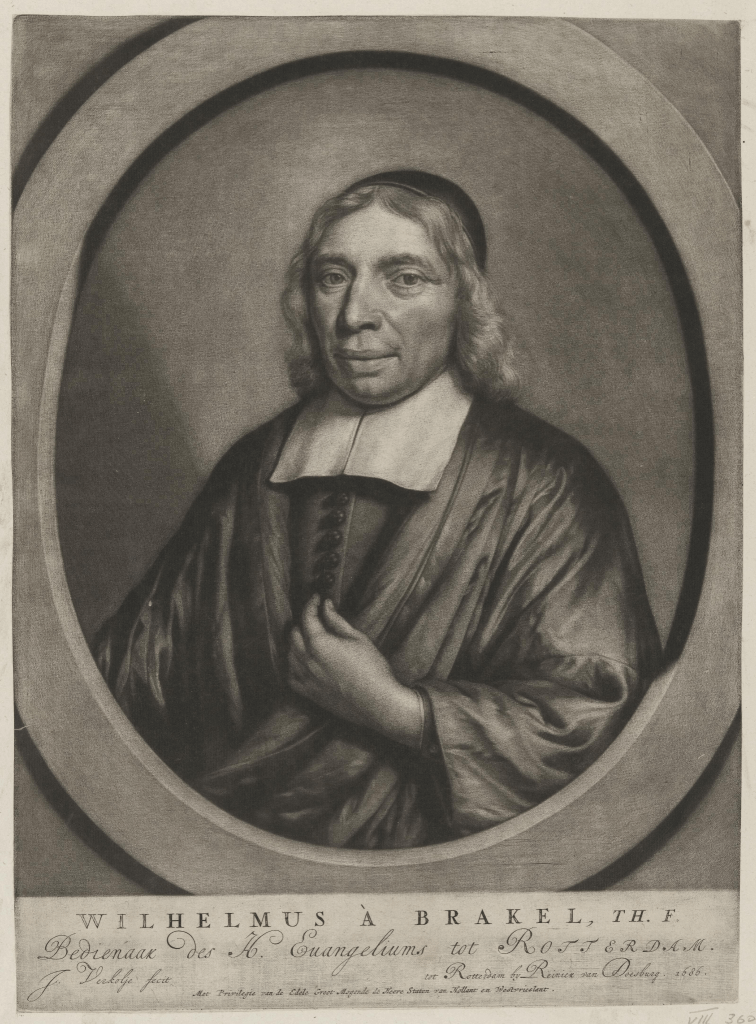
Wilhelmus à Brakel on the Depth of God’s Forgiveness
I am thankful for the grace of reading in the mornings, but in all honesty, sometimes it can be an exercise in passing words before your eyes and simply moving on. That is why I so enjoy moments such as today. I’m currently reading through Wilhelmus à Brakel’s The Christian’s Reasonable Service. In the first volume, centered on God, Man and Christ, he spends a chapter explaining the Covenant of Grace.
When Jerimiah foretells of the New Covenant, he writes that because of the impending covenant God will make with his people, an immediate result is “that I (God) will remember our sins no more” (Jer. 31:33-34).
In the span of just a few short paragraphs on page 435, Brakel reassures the reader that God promises to forgive sin in the following manner:
- COMPLETELY: He does not retain one single sin, but forgives them all; that is, the little, great, public secret, and brazen sins, as well as those sins which are frequently repeated — due either to weakness or enticement — those which continually cleave to us, and also the sinfulness of our nature. He makes no exception. “And I will cleanse them from all their iniquity, whereby they have sinned against Me; and I will pardon all their iniquities (Jer. 33:8).
- ETERNALLY: God promises that this forgiveness shall be of eternal duration, and that He will never recall these sins again. “I will remember their sin no more” (Jer. 31:34); “I…will not remember thy sins” (Isa. 43:25); “I have blotted out, as a thick cloud, thy transgressions, and, as a cloud, thy sins” (Isa. 44:22).
- TRANSFORMATIONALLY: God promises to forgive sin in such a manner that He will no longer view the sinner as a sinner, but as if he had never transgressed against Him — as if he had fully atoned for all his sins and fulfilled all righteousness. “Ye are complete in Him” (Col. 2:10); “…that we might be made the righteousness of God…” (2 Cor. 5:21).
- COMPASSIONATELY: God promises to forgive sin in such a manner that from henceforth he will behold their sins with pity — as a father does when his weak child falls. Blessed is he whose sins are forgiven.
It is easy to imagine forgiveness through our own perspective, but the danger of doing so is that we actually shrink how God approaches forgiveness. When my neighbor sins against me, my best attempts to forgive him are far too often:
- Incomplete – I forgive most of what he did, but either the biggest thing or the smallest thing is something I hold onto, in case I need to maintain my righteousness against him.
- Temporary – all it takes is a new transgression to bring back all of the previous baggage.
- Stationary – I might forgive, but I still see the sinner as nothing other than a sinner. This is saying “I forgive, but I will never trust you.”
- Coldly – My forgiveness does not compel me to get closer to the sinner. In fact, it is likely better if I remain at a certain distance from that sinner.
Oh, thanks be to God for His forgiveness, not mine!
 These Things
Leave a comment