There are a few moments we experience that I could almost confidently say are universal. Finding ice water to be refreshing on a hot, summer day. The delight of a child on Christmas morning. And perhaps even, our most awkward moments running through our heads as we are trying to fall asleep. The last of these examples is a small, sort of silly, easily relatable snippet into what morbid introspection is. It is often a slippery slope that can be descended on quickly, and it can be hard to spot in ourselves. The mom who dwells on every raised voice and is worried of traumatizing her children, or the college student who is anxious after social interactions and analyzes every word, and even the Christian who feels like they have failed with trying to share their faith to their unbelieving friend. Morbid introspection is a self-analysis that tips us to the point of wallowing in guilt, feeling like you are undeserving of the Lord’s forgiveness, and becoming stuck in a cycle that only points out your own sin and misses the grace of God altogether.

A few weeks ago I was sitting with a young woman who asked me, “how do you not grow discouraged when you keep having to repent”? She had struggled for some time with depression and had repented of a lack of trust in God with some decisions she had recently made, but she quickly felt like one wrong move and she would land back in her dark pit. She could not see that functionally she was still not trusting the Lord. She was putting faith in herself to be the one who keeps her in a place of light.
This young woman in front of me was at a loss. What does it mean that she still feels the temptation to sin? Freedom has not yet been achieved from her sin that easily entangles her. She recounts how she is doing the homework of looking to the Lord, of thinking on things that are true and pure and just and excellent. She has 1 Corinthians 10:13 memorized which reminds her that when she feels the temptation starting, she is to look for the way of escape, she is to look at Jesus and remind herself of the gospel. So then why do these instructions fail her? Is she truly someone of such little faith that she would fall into sin so easily?
I look across the room and see her tears and feel her heartache at this question. But, I know that she is telling herself something that isn’t true. Her outward sins of fearing the future, and anxiety causing panic attacks are not her greatest enemy. She still has not submitted to the Lord every aspect of her life. She is holding back and trying to be the god over a small part of her world. Her problem is not that she keeps failing in repentance, but she will keep failing in repentance until she truly submits and puts her eyes on the Lord. Her morbid introspection is only fueling her bad root of self-worship.
She and I turn to 1 Timothy 1 and read verses 12 through 17. We learn from Paul how introspection on the sin that still entangles us can be used to look to Jesus and bring him praise, not simply cause us to shrink back and continue sinning. Paul offers praise to Jesus in the same breath that he remembers his former self. He tells us that he IS the foremost of sinners. He was a blasphemer, persecutor and insolent opponent of the Church.
Most of our counselees are not dealing with sins committed directly against the church. I think Paul wants for us to grapple with the fact that in our tendency to struggle with our past sins and feel them to be too heavy or to hold us back from continuing in repentance, how much more would he have to struggle with. And yet he doesn’t struggle with that. He sees the grace and mercy that was given to him because of his sinful actions, and it fuels his worship.
Paul seems to be quite aware that sin still catches up with him, and will until he departs this world. It does not seem to bring him crippling anxiety, however. We don’t read that he struggles to do his daily work, and especially, to live out his faith, simply because he must confess and repent again. Instead, he turns to God and sees that work is being done in this process.
It is the same work that was formerly done to bring him out of sin and into light. It is a work done by Jesus, not Paul. Paul reminds himself in these moments that his faith terminates in Jesus Christ and the work he accomplished on the cross. It is for Jesus’ sake that we would live as a new creation, unburdened by the fear of the next time we sin. The work is not only benefitting Paul in his pursuit of holiness, but Jesus is putting on a display of perfect patience every time this happens, and it is for the purpose of those who were to encounter Paul to know something is different in him.
People are looking at Paul. They have heard the stories of his former life. They have read the letters written to churches. They are trying to see if this grace is real. As he looks forward to the Cross he is showing that he is a new creation. He is not bound by his sinful persecution of the church. He knows that the grace and mercy and patience that has been shown to him is done by Jesus and for Jesus. There is no boasting in self taking place. He moves forward in continued worship, not depression and anxiety, knowing that he has access to joy and peace which flows from forgiveness. If he didn’t act in this way, it would tell a lie about the faith he has in Jesus. It would reflect more of the world and self. It would be impatient and frustrating. It would go against the very call that Jesus himself gave to Paul. We must turn from self. We must stop looking inwardly and letting our guilt entangle us so much that we stop worshipping God.
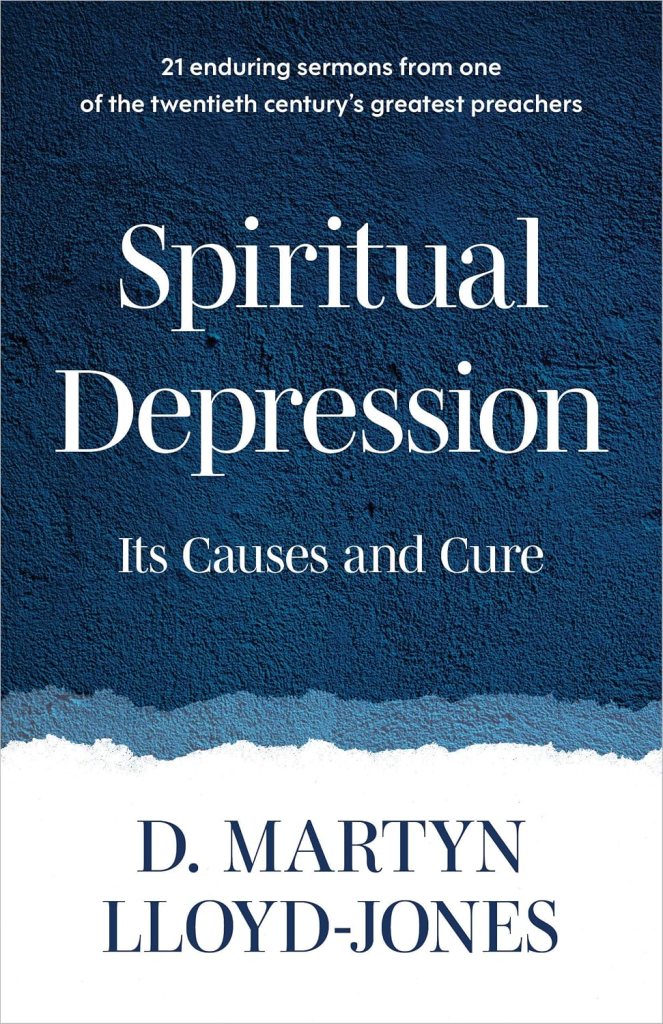
D. Martin Lloyd-Jones is a helpful voice when considering what morbid introspection looks like and how to move away from it. In the book Spiritual Depression, which includes 21 sermons on the topic of depression, he teaches that there are many ways sinners fall into morbid introspection. He tells us in his introduction that the “final and ultimate cause is just sheer unbelief” (p.20).
We often are still trying to work out a salvation that comes from our own righteousness, or faith in ourselves to not sin, instead of trusting God that faith is by grace alone, through Christ alone.
My counselee understands, but now the question is, how? Lloyd-Jones gives a recommended treatment plan here. He tells us to talk to ourselves. I often tell my counselees that it matters first what you are thinking about, not how you are feeling. Are you thinking about the things that are true, that you have learned from Scripture about God, about the salvation that is offered to you in Christ? Or are you thinking about how you aren’t good enough? Did you see how quickly that went from the focus being on God, to being on self? You must keep your eyes on the Lord. You cannot look away for a second. But if you do, know that Jesus Christ is still working out his perfect patience in you. You will not be shamed when you approach his throne and seek mercy. You will find what you are looking for, and that should not bring about fear. Rather, it should make you desperate to love your God more and more. You get to experience grace. What an incredible gift to the suffering saint who has sinned.
To the King of the ages, immortal, invisible, the only God, be honor and glory forever and ever. Amen. (1 Timothy 1:17)


Leave a Reply